

Reading Journal : South-Africa
Results of the Literary Journey in South Africa
11/11/2025
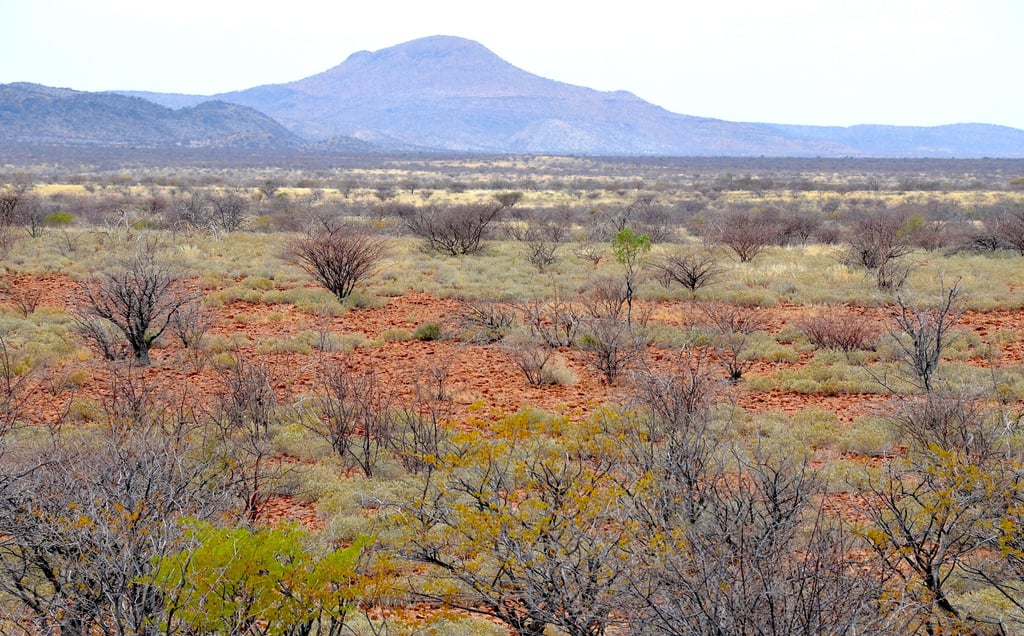
The veld, a character in its own right in South African literature
The Great Labyrinth of South Africa
After reading Histoire de l'Afrique du Sud by Gilles Teulié, one might feel equipped with the broad strokes needed to understand the country: the pre-colonial period, the arrival of the Dutch, the establishment of the first English colonies, the great treks, the war led by Shaka, slavery, the exploitation of Black populations on farms, the Anglo-Boer War, the discovery of gold mines, apartheid, and Nelson Mandela.
And while these reference points are essential to understanding the context, one quickly realises that this history rests upon an ocean of untangleable complexity.
By chance (I don't read synopses), the first work I came across was En étrange pays by Karel Schoeman, which tells the story of a Dutchman travelling to South Africa in the 19th century to recover from an unspecified illness — a practice that appears to have been common. It introduces the life of a small town, its natural surroundings, its social rifts, and above all loneliness, the novel's central theme. This loneliness stems first from the town itself, remote from everything, and then from nature — the veld (the prairie) stretching as far as the eye can see, leaving no doubt as to the reality of isolation. It also comes from the social relationships in which the protagonist cannot find himself: the normalised violence against Black people, and the ignorance of the whites, perceived as uncouth (historically, white South Africans who were not English-speaking were sometimes called "white savages" by Europeans). Expecting to find kindred souls, he ultimately encounters only strangers, with whom he is unable to forge any bond. A form of salvation is possible, linking men and nature — but I'll leave that discovery to those who choose to read En étrange pays. In any case, a highly recommended book, which makes the feelings it sets out to portray feel tangible.
I then moved on to Triomf by Marlene van Niekerk, named after a Johannesburg neighbourhood built on a former Black township, allocated to the "poor whites" — that is, the uneducated white underclass — during apartheid. Worth knowing before reading: the defence of the poor whites was one of the justifications for apartheid, particularly in the professional sphere, protecting them from competition with Black labour. Triomf tells the story of a poor white family living in Triomf at the end of apartheid. The narration is excellent. The facts are bleak — the family is desperately poor, against a backdrop of rape, alcoholism, and rejection — and with no prospect of improvement for anyone. Yet the author recounts each story with gentleness; the characters act with an almost complete detachment from their circumstances and perform themselves, which creates a skilful blend of comedy and bittersweet flavour throughout the reading, perfectly underscoring the most tragic moments. Also worth noting is a narrative style that gives space to the reader, letting them deduce rather than being told. From a more sociological standpoint, Triomf paints a portrait of poor whites awaiting the end of apartheid with a certain anxiety (fear of civil war), but with no particular political consciousness (without being pro-apartheid, Mandela is seen as a decent person), the subject being too remote from their daily concerns.
Nadine Gordimer (Ceux de July, Le conservateur, La voix douce du serpent) was my next stop. I won't say much, because I found myself standing before her books as before sculptures: the technique impresses me, the talent is evident, but it does not awaken any particular artistic feeling in me. One of Nadine Gordimer's great themes is the relationship between wealthy whites and Black people. Of the three I read, Ceux de July is the most interesting. In broad terms, it follows a small family of well-off whites who can afford the services of a Black domestic worker, July. When the protest riots against apartheid begin, the family fears becoming victims and July offers to bring them to his village until things settle down. Believing themselves to have been exemplary employers of July, the family gradually discovers the unspoken dimensions of a relationship that was unequal to a degree they had never imagined. The subject is handled with nuance and delicacy, and even if the writing didn't resonate with me on a literary level, I recommend the read.
André Brink, one of the Sestigers, offers in Une saison blanche et sèche the vision of a wealthy white man cracking under apartheid. In trying to help a Black acquaintance, Gordon, whose child has disappeared during a demonstration — probably taken by the secret police — Ben gets drawn into the machinery. Then Gordon disappears too. Ben sets out to shed light on what really happened to them. Here, the author depicts a totalitarian system that destroys anyone who rises against it, without discrimination, and the discouragement, the isolation, and the violence awaiting anyone who attempts to oppose it. The writing and narration are excellent, fully immersing the reader in the protagonist's state of mind as he slowly sinks into a paranoia that the reader ultimately comes to share. Highly recommended.
On the other side of the apartheid barrier, Pleure Ô mon pays bien aimé by Alan Paton is an exceptional novel. I have absolutely no evidence for what I'm about to say, but I have the feeling that the author wrote it with the myth of Orpheus or the Divine Comedy in mind. A Black pastor one day receives, in the small traditional village he has barely ever left, a letter from another pastor in Johannesburg informing him that his sister has fallen prey to a terrible illness (a life gone wrong), and that he must come without delay. He takes the first train to Johannesburg to find his sister, as well as his son and brother from whom he has had no news for years. His goal is at least to bring his son and sister back to the village and reintegrate them into the tribe. The hero descends into hell to find his loved ones and finds a guide who knows the workings of the city to help him stay on track. In addition to addressing many questions head-on — such as the loss of tribal life and its associated values, justice, the good life, and the ways of fighting an unjust system — the novel operates on multiple levels of reading. Perhaps the finest novel I read about South Africa.
Next, two works set respectively before apartheid (and even before South African independence) and after apartheid. Histoire d'une ferme africaine by Olive Schreiner left me with few lasting impressions; apart from a few interesting passages on the role of dreams in a life, I found the novel relatively flat.
On the other hand, Au pays de l'ocre rouge by Zakes Mda (published in 2000) appealed to me far more. This story is grounded in the true history of Nongqawuse, a Xhosa prophetess who, in 1856, had visions in which the slaughter of all Xhosa cattle would bring back the ancestors, who would then lend their strength in the fight against the colonists. Part of the Xhosa people heeded her, and almost all the cattle were slaughtered, causing extreme famine (at least 40,000 deaths) and violent clashes between Nongqawuse's followers and those opposed to the slaughter. I had read in Histoire de l'Afrique du Sud that resentment between the two camps had lingered after this episode — the followers of the prophetess blaming the opponents for not slaughtering their cattle, thereby preventing the prophecy from coming to pass, while the opponents blamed the followers for causing terrible famine and weakening the people. I had wondered what collective memory makes of this event today. Au pays de l'ocre rouge tells both this historical story and that of the descendants of those who lived through the Nongqawuse period; in Qolorha-by-Sea (a fictional village located on the land where Nongqawuse lived), the Believers and Unbelievers are still at odds and agree on nothing. The stakes of the contemporary narrative are the construction of a casino and a luxury seaside resort — the dream of the Unbelievers — which would destroy part of the sacred forest (the nightmare of the Believers). Zakes Mda is an excellent storyteller who makes his characters endearing and, above all, handles with great subtlety the questions of cultural heritage and the acceptance (or not) of progress. The characters' positions are so sharply drawn as to verge on the absurd, which paradoxically allows for a very nuanced portrait of the debate. An excellent read.
To close the purely literary section, let us deal simultaneously with Mhudi, Chaka, and the Basuto Folk Tales. Why simultaneously? Because they perfectly illustrate just how different Black traditional cultures of South Africa are from the white cultures of the same geographical area. The difference is not merely a matter of reference: it is not enough to know that Shaka was a great Zulu king whose limitless conquests gave birth to the Mfecane (the cycle of wars and forced migrations following the Zulu conquests between 1810 and 1840, causing between one and two million deaths) in the 19th century in order to understand Thomas Mofolo's Chaka. His work is embedded in a cultural foundation radically different from anything I know, and the same holds true for Mhudi (which is, incidentally, a perfect companion to Chaka, as the characters are the adversaries of the Zulus) and the Basuto Folk Tales. Passing judgement on the quality of these books would be pointless — I am not in a position to assess them. I will simply say that I found reading Mhudi and Chaka pleasurable, and I warmly recommend them, simply because they are profoundly unlike the usual reading fare available in Europe. As for L'homme qui marchait vers le soleil levant, also by Mofolo, which tells of a conversion to one of the monotheistic religions, this bridge somewhat diminishes the power of otherness.
The Great Mandela
Before turning to Mandela, there are a few non-literary books worth mentioning.
Ndebeles and Let's Speak Xhosa offer a more detailed window into the cultures of these two peoples. Ndebeles is a photography book — one immediately understands why Ndebele paintings have conquered the entire world: they are quite magnificent and deserve to be even better known. Let's Speak Xhosa is primarily a linguistics work but opens with thorough explanations of Xhosa culture; I would recommend it only to the most passionate readers.
As a bridge to Nelson Mandela, let us discuss Mon cœur de traître by Rian Malan, which is the best book I read on my South African literary journey. It is primarily a compilation of autobiographical and journalistic stories spanning the period from 1965 to 1990. It follows the trajectory of Rian Malan, from the Afrikaner community, from his childhood to the writing of this book, and above all the evolution of his understanding of South Africa. Committed to the left and anti-apartheid from his earliest years, he recounts how, while he quickly grasped the fundamentally harmful nature of apartheid, his first real awakening was the realisation that apartheid was merely a "natural" evolution of white domination over Black people in South Africa. This is a consensual position — historians agree that apartheid was simply an overt and even stricter version of the discrimination Black South Africans had endured for centuries. Where the narrative truly becomes compelling is when the author sets out to measure the chasm separating whites from Black people, since even after apartheid's repeal (the book was written before that moment), building bridges between communities would remain the great unfinished task. One can only praise the intellectual honesty of an author who unflinchingly reports elements that contradict his own assumptions or theories. Anti-apartheid to the last, anti-discrimination to the final line, he nonetheless recounts instances where he fails to understand Black communities, his fears, and his moments of despair. His conclusion is that the communities of South Africa — which are not reducible to a simple Black/white opposition — have never spoken to one another, but that there is hope: slim, but hope nonetheless. If only one book were to be read beyond Histoire de l'Afrique du Sud, I would recommend this one, because it perfectly illustrates the tensions that have underpinned the country for so long.
And it is precisely this which allows one to fully appreciate the greatness of Nelson Mandela's achievement. Given the discrimination endured by people of colour (Black people were not the only ones affected by apartheid) over the preceding centuries; given the suffering Mandela endured throughout his life; given his ideological position (he believed that the resort to violence was a legitimate means); given those around him — no one would have been surprised had a desire for vengeance lived within him. Making this choice of reconciliation, and doing everything possible to allow African communities to live together in peace (let us not forget the violent clashes between Zulus and Xhosa in the immediate aftermath of apartheid's repeal), was undoubtedly the only path capable of giving the country hope for a peaceful future, and speaks to an extraordinary strength of character. He worked enormously to create dialogue between communities and to break the cycle of violence. Now that I grasp the full scope of his work, I find myself thinking that there are simply not enough streets, squares, and parks bearing his name.
A Small Curiosity to Close This Journey
Among everything I read about South Africa, one book stands somewhat apart: The Soul of the White Ant by Eugène Marais. I read it because its author is considered a significant figure in the literary history of South Africa, and as a descendant of French Protestants exiled following the revocation of the Edict of Nantes, his is a profile unrepresented elsewhere on the list.
I am not quite sure what it is. The Soul of the White Ant is simultaneously an entomological study of South African termites, drawing at least in part on 19th-century scientific method (doxographic review, hypothesis formulation and testing, etc.), and a work of philosophy. The author argues for a revision of what qualifies as a living being, contending that in the case of a termite colony, there is in fact only one living entity: the termite mound. Regarding each individual termite in isolation is a mistake — much like equating the heart or red blood cells with independent living beings. And naturally, there is a more metaphysical reflection on the nature of the soul, and in particular its location in the case of the termite mound.
Setting Course for Albania
I am heading to Albania without having read all the planned books… there are several I was unable to obtain, but perhaps that is for the best, as I believe my eyes were bigger than my stomach. The initial list was around 28 books; I read only about twenty, and I already feel the pull of other lands. South African literature is an endless labyrinth, and I believe I will return to it one day.
For now — onward to Albania!